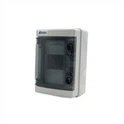
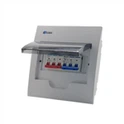
A miniature circuit breaker is an electromagnetic device that carries a complete molded insulating material. The primary function of this device is to switch the circuit. This means to automatically open the circuit (which has been connected to it) when the current passing through the circuit goes beyond a set value or limit. The device can be manually switched ON or OFF just like normal switches whenever necessary.
MCBs are time-delay tripping devices. In these devices, the operating time is controlled by the magnitude of overcurrent passing through it, which means that the device functions whenever there is an overload existing for long periods, long enough to endanger the circuit being protected. MCBs do not respond to transients such as motor starting currents or switches surges. Typically, these devices are designed to operate at less than 2.5 milliseconds when there are short circuit faults and between 2 seconds to 2 minutes in case of overloads.
MCBs have three primary characteristics: Amperes, Kilo Amperes, and Tripping Curve
Overload Current Rating- Amperes
Overload occurs as a result of putting too many appliances on one circuit. This will make the circuit draw more current than it or the cable can actually take. This could happen anywhere in the home, but especially in the kitchen. Take for instance, when the microwave, kettle, electric bob, blender, and dishwasher are all being used simultaneously. The MCB on the circuit cuts power, thereby preventing a case of overheating and possibly, fire in the cable and terminals.
Short Circuit Rating – Kilo Amperes
Short circuit occurs as a result of a fault somewhere in the circuit or electrical appliance. Short circuit is potentially more dangerous than overload as the speed and scale of the current is in a different order of magnitude. Short circuit happens when there is a direct connection between the neutral and live conductors. Without the resistance given by the usual circuit integrity, electrical current rushes through the circuit in a loop and increases the amperage by up to three thousand times in mere milliseconds.
The MCBs used in domestic installations are usually rated at 6000 amps or 6kA. SO the relationship between a typical domestic appliance rating and normal voltage (240v) allows that the over-current occurring as a result of short circuit should not exceed 6kA. However, in industrial and or commercial settings where 415v and large machinery are being used, it will be advised that a 10kA rated MCB is used. The ratings signify the max prospective fault current (PFC) that the MCB can take and still function properly by switching the circuit. Should the PFC be exceeded, this may cause failure in the MCB, which may result in contact welding shut.